Ifá guide
What is Ifá?
Ifá is the spiritual tradition of the Yorùbá people and, at the same time, their body of knowledge: a way of reading the world handed down from elder to student across generations, without ever ceasing to be alive.
The Odù: how Ifá is ordered
Ifá is ordered into sixteen Ojú Odù. Their combinations yield 256, and each one holds its verses, the stories they come from and the message they carry. Every Odù of Ifá you study in the academy is one of them.
What each verse carries
Every lesson opens into the parts it is studied through in the tradition. Not all of them carry the six: the song and the work arrive when the verse calls for them.
ÀṢẸ IFÁ
The message of Ifá: what the verse comes to say.
ẸBỌ
The sacrifice Ifá prescribes in the verse. The lesson sets out each Ẹbọ separately: why it was prescribed, its materials, to whom it is offered when the verse says so, how it is done and what it seeks. To perform it you must be initiated into Ifá and qualified to carry it out.
IṢẸ́ IFÁ
The work of Ifá, when the verse carries one.
ẸSẸ IFÁ
The verse. It is what the Ọlúwo recites and what you repeat.
ORIN
The song of the verse, when it has one. Not every verse carries one; when it exists, it completes the lesson.
ÌTÀN
The story of the verse — where it comes from and who it happened to.
Ifá Is Learned by Ear
None of this is learned by reading. It passes from voice to voice, and in a very particular way: the Ọlúwo sits the ọmọ awo down in front of him, recites the verse and stops so it can be repeated. Then again, to the end. That is the method, and it is the one the academy carries into the app unchanged.
And it isn’t only the old method: it is the best there is. What the verse means lives in the voice — the tone, the length of each syllable, where the reciter breathes — and none of that is written down. You learn it by hearing and repeating, or you don’t learn it.
Who can study Ifá?
Anyone can begin to study: the verse, its story and its message are open to whoever approaches with respect. The ritual and the work of Ifá are another matter: to perform them you must be initiated into Ifá and qualified to carry them out.
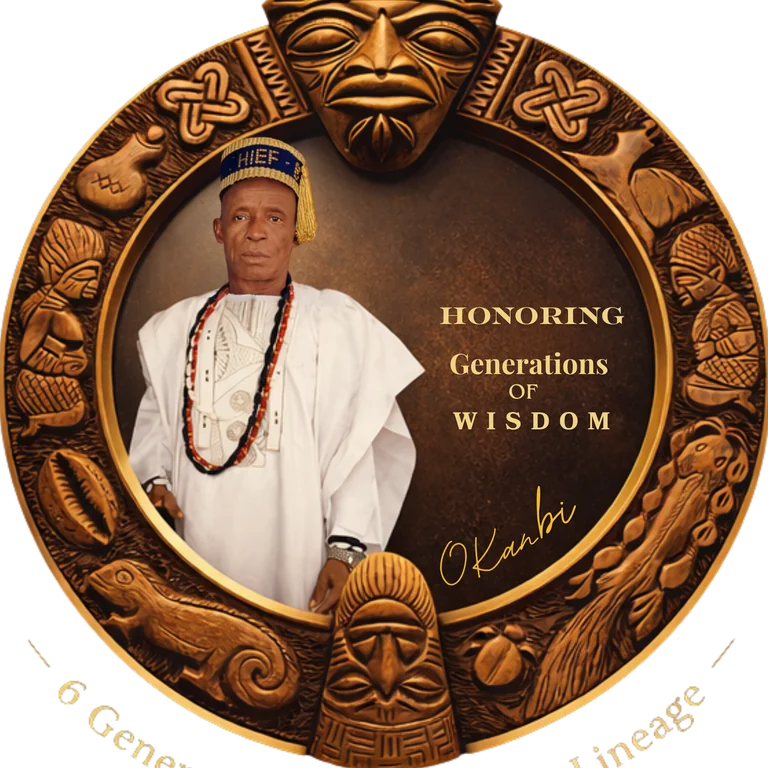
Six generations of babaláwo
The Adeleye family has carried Ifá in Abẹ́òkúta, in southwestern Nigeria, for six generations. Father to son, as traditional babaláwos: the verses, the scholarship and the ritual responsibility have been handed down within the house, unbroken.
Babaláwo Okanbi brought that lineage west and teaches from Miami. What you hear in the lessons is not a reconstruction assembled from books — it is that same transmission, recorded.